Wednesday, July 13, 2016

Health Care Cabinet starts work on recommendations for reform

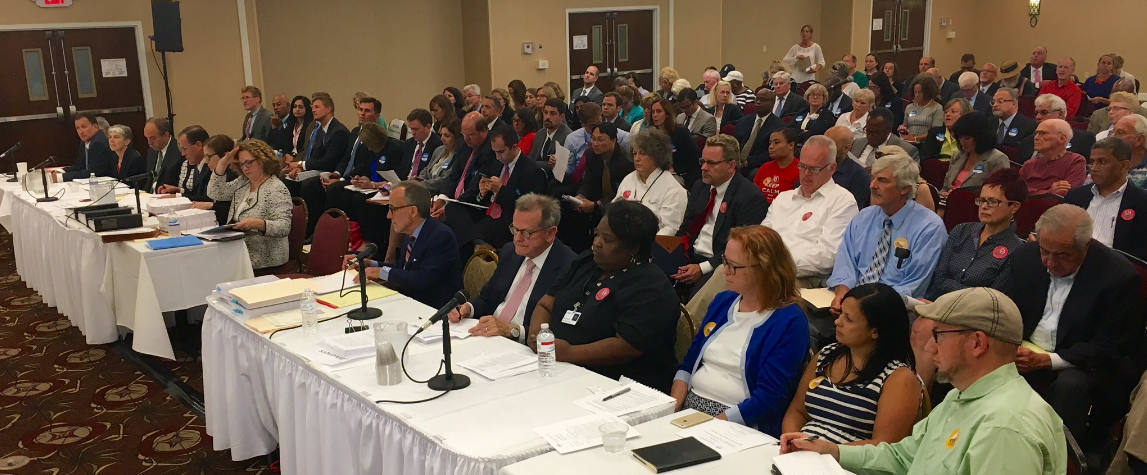
Yesterday the Health Care Cabinet gave consultants initial feedback on their “straw man” recommendations to improve health care and control costs in CT. The Cabinet has spent the last several months exploring leading state reforms preparing for our December report to the General Assembly. Members expressed concerns about the proposed consolidation of all state health agencies into a single agency and creating another new agency for health policy planning. Members suggested less complicated and less costly ways to achieve the same goals of coordinating activities and analyzing data. Deep concerns were voiced about a return to capitated financial risk for Medicaid. Since leaving capitation four years ago, CT Medicaid has improved the quality of care, engaged significantly more providers, and reduced per person costs -- by 5.9% just last year. Concerns were also raised about an 1115 waiver, which has been a tool for increased resources but also to reduce care in other states. It’s important to decide on goals first, before jumping to a risky and controversial strategy. A proposal to join Medicaid and state employee plan purchasing has failed several times in the past. While the goal of reducing market concentration is a good one, the recommendation needs to be much stronger. There was strong support for using data and evidence in health planning. Dozens of good ideas that will be necessary to any successful reform were missing from the list and efforts beyond state government were not recognized in the report. Advocates will be providing the Cabinet with feedback and alternatives to the recommendations. One thing the consultants got very right was the main challenge to reform in CT – “Lack of trust among key stakeholders.” It was suggested that we start with smaller, more realistic steps (we can afford) that give early successes and build trust. The next meeting will be August 9th.

Community voices fears about proposed YNHH acquisition of L&M

OHCA’s public hearing about Yale-New Haven Health System’s plans to buy Lawrence & Memorial Monday in New London ran over 6 hours and had to be continued to later this month to finish. Public comment was split between those favoring the deal and others with concerns. A coalition of community groups, labor and consumer advocates, including the CT Health Policy Project, have been certified as intervenors. We are concerned that the deal will cement CT’s anti-competitive hospital/health system market driving up prices, lowering access to care, reducing consumer choice and undermining efforts to improve quality and value. The applicants have suggested that they will invest $300 million in the New London region, but won’t say how or where the money will come from, and they will make those decisions behind closed doors after the deal is done. Intervenors urged YNHH to use the transparent Community Health Needs Assessment process, required by the ACA, to develop a plan for that funding in partnership with the New London community. Research finds that monopolies drive up health care prices more than 15% – CT prices are already too high, and the state budget is too tight to withstand this.

Monday, July 11, 2016

Medicaid update – HUSKY parents’ time running out, home health and dental get different cuts, autism services moving

Friday’s Medicaid Council touched on several critical issues. We got an update, of sorts, on the fate of HUSKY parents facing the loss of coverage in three weeks. 20% of the 13,811 at-risk parents have either re-qualified for Medicaid (the large majority) or signed up for an AccessHealthCT plan. 3,877 parents from the original number are already off the program – examples given include no longer having a qualifying child in the household or moving out of state. No detail on any of these numbers was given. However AccessHealthCT is making significant efforts to inform at-risk parents including a link to Statewide Legal Services of CT’s fact sheets in English and Spanish that include full information about options and how to prepare for those who will likely become uninsured.

We also heard about very different decisions on provider rate cuts. Planned 5% dental rate cuts have been reduced to 3% or 2% and will, in part, drive quality by reversing payment for sealants and fillings that failed before they should have. However the proposed rate cut to home health agencies for medication administration will go forward unchanged despite a proposal by the home health providers’ organization that would have filled $13 million of the $14.8 million budget hole. There is an honest disagreement about appropriate levels of care. Concerns were raised that this cut will reduce access to critical services, especially for behavioral health care, and could interfere with progress keeping people in community settings.

We also heard about the promising shift of autism service delivery to DSS and Beacon Health, the behavioral health ASO. Services include behavioral treatment as well as access to peer specialists and care coordinators. DSS and Beacon are working to improve initial assessments and recruit new providers. It is hoped that the shift will expand access to high quality care for people with autism spectrum disorder.


Thursday, July 7, 2016

Wednesday, July 6, 2016

CT Health Reform Dashboard – SIM ethics problems grow, an insurer lost, HUSKY parents losing coverage

July’s CT Health Reform Dashboard update is very active. SIM ethics problems are back in the news, with the death of a bill that would have closed the legal loophole that exempts SIM appointees. The state insurance department has suspended HealthyCT, our state’s only non-profit, homegrown insurer. This is troubling on many levels including reducing consumer choice, adding to our anti-competitive market, and that non-profit, local insurers are an important partner supporting constructive health reform in other states. 11,677 working parents still face uninsurance at the end of this month due to HUSKY cuts. Only 15% have either been able to stay on HUSKY or been able to afford AccessHealthCT coverage. Advocates are urging the state to provide useful information in notices to at-risk parents. The Health Care Cabinet has completed a survey of other states’ reforms and CT’s context. Now negotiations begin on recommendations for Connecticut. The Governor’s CON Taskforce is also beginning their work making recommendations to ensure access and affordability in a competitive health care market. Next week OHCA is holding a hearing in New London to consider Yale-New Haven’s plan to buy Lawrence & Memorial’s hospital and physician groups.

Tuesday, July 5, 2016

New HUSKY parents numbers show a lot of work needed before July 31st

No one knows why, but the number of HUSKY parents expected to lose coverage at the end of this month dropped from 17,688 to 13,811. That’s probably good news (depending on whether those four thousand already lost coverage and why), but as of late last week, only 15% had either been able to re-enroll in Medicaid or chosen a plan through AccessHealthCT. This leaves over 11,000 working parents at risk of becoming uninsured as of August 1st. Of the 2,134 parents who were reached, 70% were able to re-enroll in Medicaid (either because family income dropped or through another category). Only 635 were able to afford an AccessHealthCT plan and enrolled. AccessHealthCT intends to continue outreach efforts. Statewide Legal Services of CT has published a very helpful fact sheet for working parents facing the HUSKY cuts, in English and Spanish.

Friday, July 1, 2016

State policymakers hear about successes and challenges in Medicaid reform

Wednesday’s Medicaid Reform meeting hosted by CSG-ERC Health Policy Committee highlighted the variety of approaches states are taking to address their unique challenges. All states are committed to move away from volume-based payment models toward building value. All states were also committed, and have devoted significant resources, to quality improvement and delivery reform to build programs that are centered on patients. But states face different challenges, cultures and capacity. The all-day meeting at the Boston State House included Medicaid officials, legislators, staff, federal officials and other stakeholders. We heard from Bailit Health researchers about their recent survey of Medicaid reforms across the US. The survey found that states are moving into value-based purchasing because of strong pressure from CMS, internal strategic priorities, budget constraints, and active policymakers. State Medicaid programs are moving more slowly and tentatively into financial risk models than the private sector because of the unique nature of the program, its providers and members. We also heard from NESCSO, a non-profit organization funded by New England states to support state Health and Human Service Agencies. NESCSO provides staff training, information exchange, and collaborative solutions such as joint purchasing of services to support reform. NESCSO is planning to bring panels of federal health officials to states. To start the lively Policymakers’ Roundtable discussion we heard from Medicaid officials from NY, MA, RI, VT and CT. Discussion focused on what has worked and where the challenges still are. One member noted that “Medicaid reform is not like flipping a switch. It’s more like slowly turning up a dimmer.” We heard about new DSRIP opportunities, Accountable Care Organization development and regulation, underservice protections, multipayer collaboration, aligning quality targets, addressing social determinants of health, re-focusing programs on members’ needs, strengthening primary care and care coordination. The main request from participants to CSG-ERC for the future was to continue opportunities to meet and share resources. Slides and other documents will be posted online soon.